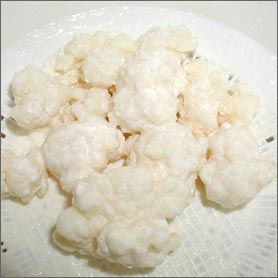
I had two heads of cabbage sitting around that I was meaning to make in to sauerkraut, but didn't have time.
One of the reasons I didn't have time is that on Thursday night I went to see a speaker on parenting issues. In particular, power struggles. One of the main lessons for me was that getting enough sleep is important for family harmony. And one way to encourage that to happen is to turn off the TV & computers after dinner.
So Saturday night we did just that. Now I needed something to do. So I invited my 3 1/2 year old to join me for making sauerkraut.
I figured it would include some of his favorite things:
- Hitting. Cabbage instead of people
- Salt. Lots of it.
- Time with Dad.
So I cleaned the counter, and started slicing cabbage. His job was to grind coarse sea salt on to the cabbage, load it in to the crock, and then grind some more salt.
He would step every minute or so to take apart the salt grinder, or to eat salt off the counter. He knew I was watching, so he would try to hid behind his hand or turn away. Heh.
Finally we got all the cabbage loaded in to the crock, and I put the plate on top. It was too tight a fit, snagging on the sides of the crock. Then I remembered Sandorkraut's advice to put some of the previous batch on top to help it get going. I added enough to hold the plate up & stop it from binding.
The new batch is now fermenting away, and the previous batch is packed in to jars in the fridge. I had some with dinner last night. Yum.
I also started a sourdough starter last night. Combine flour & water. Stir daily. Feed it every 3 days or so. In a week you'll have "naturally leavened" dough, ready to go. We'll see.
Tuesday, March 29, 2005


Tuesday, March 22, 2005
A crock of...
Last week
Nice weather last week, and I celebrated by walking to/from work, instead of taking the bus. I haven't really done any exercise since the weather turned wet in the fall, so my body needs this.
I stopped at the Uwajimaya to look at fermenting stuff. What a find. They have all kinds of asian vegetables that will be great for fermenting. Kimchi goes on the todo list.
They also have raw fish for making sashimi. I bought a 1oz strip of tuna (only $26 / pound!) and ate it on the walk home. It feels really odd to be gnawing on a strip of raw flesh while walking in the suburbs. I’m sure I’ll get used to it…
There’s always a small risk of getting sick from eating raw food. If it’s clean, fresh, and carefully prepared, and your body is health, the risk is pretty small. Just to be on the safe side, I drank a tall glass of Kefir when I got home. (The good bacteria in the Kefir will compete with any bad bacteria elsewhere.)
Saturday
Saturday we went to a super-thrift-store. It's an odd beast, the cross between a Walmart and a flea market. You never know what you'll find, and it will take a couple hours to really browse the whole store.
Since I got in to fermenting, I've been looking for ceramic crocks. I prefer to keep live foods in ceramic or glass, avoiding plastic and metal. But I hadn't found a real crock until now. Most of what google finds are small and decorative, not for cooking. I did find that the Harsch fermenting crock starts at only $110!
So I was excited to see crocks at the thrift store. They had at least 8, for under $10 each. Jackpot! I bought 3. They didn't even charge for all the dust that had collected in them!
I also picked up a set of 4 glass plates to use as lids, a meat pounder, and an old-fashioned hand blender.
We then went to the local gourmet natural grocery store. It's expensive, but because of St. Patrick's Day they had organic cabbage on sale for $0.79 / pound. I bought 4 cabbages to supplement that cabbage that was already in the fridge.
At home, I thoroughly washed all the new stuff & cleaned the kitchen. Then I cut up 3 heads of cabbage for sauerkraut. I salted as I went, loaded it into a crock a bit at a time, and beat the crap out of it. The idea is to pack it down enough that the juices come out of the cabbage & cover it. This will keep mold and aerobic bacteria from growing on the cabbage. (The salt also helps, keeping the bad bacteria from growing, only allowing Lactobacillus to grow).
While pushing down pretty hard with my fist, some cabbage slipped & I twisted my wrist. It hurt, but wasn’t strained. 10 minutes later I did it again. (2 days later, one of the muscles in my forearm is sore, but I’m ok.) I did break the crock, however. A crack down one side & across the bottom. Oh, well. For $6, I can let it go.
We had been low on milk for a while, so I paused the kefir production by putting it in the fridge. We bought 5 bottles of milk (1/2 gallon each) at the store. This milk is really tasty, and non-homogenized.
I used 1 quart to start a new batch of yogurt. Left it sitting in the oven with the light on overnight.
Kefir grains go dormant if they sit in the fridge too long, so I brought out all of my grains, even the backup grains I was keeping. I used them to start 5 batches of Kefir in various jars. I figured I had run up a “kefir debt”, and needed to pay it off.
The kefir I strained that night was mixed with flour for fermented pancakes. Combine 1 cup flour & 1 cup kefir. Let sit 7-24 hours, to predigest the wheat. Use in your regular pancake recipe.
I finished at 1:30am, too tired to make the other 2 heads of cabbage in to anything.
Sunday
Sunday afternoon we stopped at Uwajimaya to get dinner. I bought supplies for miso (a tub of raw miso, koji, soy beans). I also picked up two 8oz strips of raw tuna. One I cut up and dipped in soy sauce to eat. Yum! The whole family liked it.
I brought out some of the just-decanted sauerkraut from last week. My wife says she likes it, which is wonderful. My son isn’t so interested, however.
I took a bunch of the freshly-made yogurt & hung it up to drain. I had a few false starts, where it just poured straight through the cheesecloth. Ended up using a linen napkin. The result could be called cream cheese, but we call it lebne. It’s awesome spread on bread.
After dinner I prepared 8 tomatoes for salsa. We also had a box of cherry tomatoes that I halved. Add to that 8 or so sweet chilis – the flavor of red, yellow, and green bell peppers, but they look more like a hot chili pepper. Then 4 small hot chilis. Ideally I would blanch, peel, seed, and dice them all. But I just didn’t have the energy, so I just diced them. I split into two batches – the hot chilis + 1 head of garlic, diced went into only one batch, since my son doesn’t like spicy food. Add whey from the lebne, salt, oregano, and lime juice. (Wanted to add onion, but didn’t have any). This is packed in to a jar & is currently sitting on the counter. My instructions say 3 days, but I’m tempted to go longer.
Monday
Work day today, not as much time or energy to ferment stuff. Walked home and picked up a strip of yellowtail from Uwajimaya. Wasn’t as nice to eat as the other fishes. Salmon was my favorite, but they add artificial color.
Came up with a big list of things to make tonight. There’s 2 heads of cabbage for sauerkraut, kefir to strain, the other strip of tuna from last night (to ferment), Arabic bread to go with the lebne, a “ginger bug”, a wild sourdough starter. Not enough time for all of it.
I found that the koji had been sitting unrefrigerated. I’m thinking that 24 hours isn’t a problem. But since my miso will probably take 18 months, I don’t want to take any chances.
The kitchen was a mess (which is fine) but the dishwasher was full of dirty dishes. Can’t do much with that. Started it up, but it takes so long that I can’t reload tonight.
Found that the yeast in the fridge was 3 months past the “use by” date. There’s a way to test the yeast for activity, but I’ll need to look that up first.
The series of disappointments put my in a crappy mood, so I did the minimum & got out of there. Kefir & fish. Chilling out in front of the PC with a fresh kefir in hand.
It’s 1am now. Should I go back to the kitchen, or call it a night?
Tuesday, March 15, 2005
Saurkraut and other ferments
We continue to do daily kefir. We use 2 1qt jars. There’s some space for air, some kefir lost on various surfaces, and I put a bit of the fresh kefir back in the next batch to help it get started. The upshot is that I actually get 1qt of fresh kefir out of each batch.
The amount we drink varies each day. I try to keep about a quart of fresh kefir in the fridge to give us some flexibility.
I have backup grains in the fridge that I will share with anyone who wants. I try to pull these out about once/week & run a batch of kefir with it. This gives me a little extra to store in the fridge, and wakes up the grains so they don’t go into a deep sleep.
For breakfast yesterday I made pancakes. Whole wheat flour, kefir, butter, salt, baking soda, bananas. Ideally I’d mix the kefir & flour the day before, to culture the wheat a bit. I’ve read that makes it easier to digest.
Saturday night I started another batch of yogurt. The first batch, from last week, was really good. Some of the credit goes to the very good milk we use. This week’s batch was much more sour, but still good. I plan to make Lebne with it, and use the whey that comes out to help get some other ferments going.
My darling wife brought me a gift of a head of cabbage. Last night I chopped it up, covered it in salt, and jammed it in to a jar. I pushed down with various kitchen utensils until it looked well packed. The juices did come out enough to cover the top. A heavy glass filled with brine sits on top to maintain pressure. This will be sauerkraut (I hope).
My friend John Bain brought me some of his grandmother’s kimchi, which he says is the best. I’m no kimch connoisseur, but it was very good. German sauerkraut is a cultural transplant of kimchi & other Asian fermented cabbages. I intend to make kimchi in the future.
With St. Patrick’s day coming up, cabbage has gone on sale at the grocery store. We think of corned beef and cabbage as being very Irish, but we’ve forgotten that traditionally it was a fermented foot. Both the corned beef & cabbage were fermented.
Capt. Cook’s exploration of the Pacific was supported by sauerkraut. At the time, sailors would get sick a lot due to poor nutrition. Cook’s crew was unusually healthy, thanks to the 600 lbs of sauerkraut that he carried. Well, so I’ve read.
I’m going to take advantage of the sales & make a bit of extra sauerkraut over the next couple weeks. It will keep well :-)
Sunday, March 06, 2005
Next fermentations
Sunday evenings seem to be a good time to get something started, and tonight I got a little crazy.
Ginger beer. Grated ginger, lime juice, water, salt, whey, sugar. Will let it sit on the counter for 2 days. It's suppsoed to be really good for quenching thirst after hard outdoor labor in the sun. I'll drink it anyway.
Potato cheese. Mashed potatoes, kefir. Will let it sit for 2 days, then strain through a cloth. We have a lot of potatoes, but don't really eat them often, so I figure this was a good choice. If we don't like it & throw it out, it won't be any worse than letting them sit on the fridge & grow something else...
Yogurt. It's an easy one, so I'm going for it. Heat milk gently on the stove. Add live yogurt as a starter. Let sit in the oven with the light on overnight. Move to fridge. Will use for:
Lebne. Strain yogurt through a cheesecloth. Spread on bread. I grew up eating this stuff.
I've asked my wife to buy a bunch of whatever organic vegetables are on sale. I'll ferment them, which means I'm preserving them to use over the next month.
Oh, and the other day we walked by a yardsale where they had a huge box of glass jars. $1 for the whole thing. Deal! Gonna need it....
Did I mention the kefir juice? Someone left a pint of juice here, and we don't drink much of the stuff (too much sugar). So I tossed a few kefir grains in & let it sit for the week. It has become more tart. Not sure how much longer to leave it until it's "good"...
Traditional Salsa
I've been reading up a bit on fermented & cultured foods. One of the things that I find fascinating is that these foods have been part of just about every traditional diet. Saurkraut, kimchi, tzatziki, and kvass were all traditionally prepared with active cultures.
Americans today eat very little live food.
One of the other commonalities I've found is that many of these foods are made in almost the same way:
- Cut/shred a vegetable
- add salt
- add whey or more salt
- add some ingredients for flavor (e.g., garlic, herbs)
Mix & press down into a jar. Add salt water ("brine") until it covers the veggies. Put a weighted cover on to hold the veggies under the brine. Wait 2 days - 1 week.
I tried this once to make ginger carrots. We had 2 bags of baby carrots, and I grated them all. Bad idea. Next time I'll use full-size carrots! I let if ferment for a week, but decided I wasn't ready for the unusual taste & threw it in the compost.
Next I tried kefirkraut. It's saurkraut made with kefir grains to get it going. I let it ferment for a week, tasted a tiny bit, and threw it out.
30 years of a diet without fermented foods. It's going to take me some time to get used to it.
Next attempt was salsa, with a recipie from Nourishing Traditions. Tomatoes, onions (didn't have any, so I skipped it), chilis (didn't have any, so I used a yellow bell pepper), garlic, oregano, salt, whey, water. Fermented for 2 days. Tasted it, and it was delicious. Let it sit an extra 1/2 day to get a bit more pungent. Moved to the fridge.
I used a spoonful or two with every dinner until it was gone.
Success at last.
Friday, January 07, 2005
Including my family
A reader asked:
home with him more.
Most of my ideas would make life for my family less convenient, a fact that has not been lost on my wife. I don't want to be taking away the facilities that they depend on every day. For example, when I propose moving to a smaller home, I am taking away the generous indoor playspace they have today.
At the same time, my wife & I agree that we want to consume less energy, produce less waste, spend more time together, make our work more meaninful, and improve our health. We also agree that we are overwhelmed by the amount of stuff we own. We are reminded of this fact every time we clean for guests or before the maid service comes. (Yes, we clean the house so that we can pay other people to clean the house!)
So as long as I remember to be senstive to the needs of my family, they are interested and involved in the plan.
Not to be nosy, but what does your wife and child think of your living
simply quest?There have been a lot of 'I' and 'My/Mine' in the posts...
Good question.
home with him more.
Most of my ideas would make life for my family less convenient, a fact that has not been lost on my wife. I don't want to be taking away the facilities that they depend on every day. For example, when I propose moving to a smaller home, I am taking away the generous indoor playspace they have today.
At the same time, my wife & I agree that we want to consume less energy, produce less waste, spend more time together, make our work more meaninful, and improve our health. We also agree that we are overwhelmed by the amount of stuff we own. We are reminded of this fact every time we clean for guests or before the maid service comes. (Yes, we clean the house so that we can pay other people to clean the house!)
So as long as I remember to be senstive to the needs of my family, they are interested and involved in the plan.
The two threads.
If you look over my posts about how to live, you may see some conflicting ideas. That's because there's really two different things going on:
1. Live simply. Don't let the stuff I own own me. Give up stuff I don't need + some stuff I do like to free up time. For example, I have removed 4 computers from my home, which means I don't have to spend time maintaining them. I give up the power of those PCs to gain the time.
2. Live frugally. Don't buy as much stuff, reduce my dependency on civilization, waste disposal, energy sources, and my job. Do more for myself instead of paying someone else. Cook my own meal instead of eating out.
Sometimes these ideas work together: moving from a suburban house to a cheap city condominium means I save money on the mortgage, don't have to pay anyone to mow a lawn, can get rid of a car & walk instead.
Sometimes they work against each other.
If I want to start cooking all my own meals, instead of eating out, I would like a well-equipped kitchen to make it more convenient. But that means having a large enough kitchen to keep all the appliances accessible. I'd want a nice set of knives, which need to be in a knife block on the counter, instead of in a drawer.
If I want to grow my own vegetables, then I'll need land (not a condo), and various gardening implements.
Man, simplicity is complicated!
Living simply in the kitchen
What's the minimum you need in the kitchen?
I have a microwave, a conventional oven, a stovetop, a Foreman Grill, a waffle maker, a toaster over, a coffee maker, a rice cooker, a slow cooker, and a bread maker. All except the microwave pushes electricity through coils to make heat to cook food.
If I were living on a small boat in the middle of the ocean, could I get by with a small oil-burning stove?
I have a blender, a food processor, a wisk, and a bunch of plastic & wooden spoons. (I don't have a mixer, but most people do.) Could I get by with just 1 spoon?
Knives seem to be a critical part of a kitchen. When cooking, I really enjoy the feel of a good knife. A sharp blade, heavy, well balanced, a gentle curve to the blade, and a wide edge on the non-cutting side (to push with my other hand). Could I get by with just 1 or 2, if I take really good care of them? I think I'd like to learn to make a knife myself...
I'd need a small and a large bowl, a skillet, a large pot, and a cutting board.
One thing I'm overwhelmed by today is those little plastic food storage containers. They have to be carefully nested to store and carefully matched with lids to seal. They stain with tomatoes, scratch with knives, and maybe leach nasty chemicals if microwaved.
200 years ago, waht did they do with leftovers?
Thursday, January 06, 2005
Living without heat
A while back I heard an article on NPR about a writer who lived & worked in her home without heat, even in the dead of winter. She talked about how she wore many layers, but that she still was pretty cold in her office, which was on the north side of the house. She also talked about how it helped her connect with the many people in the world who don't have a choice: they live without heat, clean water, medicine, etc., and suffer for it.
I live in great comfort, but I find myself questioning it at every turn.
If anyone can point me to a transcript of the article, or to internet resources about this person, or other people making similar choices, I'd be greatful.
I live in great comfort, but I find myself questioning it at every turn.
If anyone can point me to a transcript of the article, or to internet resources about this person, or other people making similar choices, I'd be greatful.
Vacation Kefir
We are visiting my inlaws, and have been here for 2 weeks now. All told I'm away from work for 3 weeks this time; the longest since I started at Microsoft 8 1/2 years ago. But I haven't been completely disconnected, instead spending a lot of time on the laptop playing with C#.
This week the weather was great, and we've spent a lot of time outdoors (and barefoot!). I'll miss that when we return to Seattle.
My mother-in-law makes a drink called Kefir. Humans have been drinking it for 12,000 years, so there's a lot of variation on how it is prepared & consumed across various cultures (pun!). She makes it by simply putting Kefir "grains" in to a jar of raw milk, and letting it sit on the counter for 24 hours. She then strains it & it's ready to drink. They mix some sweetener in, but I've been enjoying mine plain. It's slightly tart, and slighly effervescent.
One of the interesting things about Kefir to me is that it represents an about-face in my relationship with microorganisms. The conventional wisdom is to strike them out - wash hands, disinfect utensils, pasteurize, refrigerate, etc. With Kefir, you instead cultivate more microorganisms, the kind you like, and they overpower the bad kind. Consider: the "grains" are used continiously for months, never referigerated, and constantly immersed in raw milk. It never goes bad!
If you see someone with a cold, do you think "stay away, I don't want to get sick"? Or do you think "I am taking good care of my body, so I know I'm not likely to get sick". I'd like the latter.
I've also been reading about other related brewed/fermented concoctions, like traditional salsa or saurkraut. It looks like every culture has a history of using these with meals. It preserves food without refridgeration, predigests so you can more easily absorb nutrients, and adds more nutrients to what you eat. Good deal.
Could I live in 2004 without refridgeration in my home?
If I sail around the world, not having a fridge or icebox (or just having a very small one) would sure make things simpler.
Must keep exploring...
Monday, December 06, 2004
I want you to work this many
From Reid:
Mom is telling me that she's about to go away. I don't like it when she leaves, so I tell her I don't want her to go. She says that I'll be with Daddy. I like Daddy, but I really don't want Mommy to leave.
She says she'll only be gone for this many hours (holds up 4 fingers). That's probably a long time. Then she says that Daddy is gone every day for this many hours (holds up 10 fingers). That's really a lot!
I tell Daddy that I wish he only worked this many (I hold up 4 fingers).
He says he could do that (but I know he's saying he can't). He then says we'd have to get rid of some of our stuff and change how we live. He asks me to choose some toys to give to other children. Together we look at each of my toys, and all of them look fun. I want him to play with me.
Later we play with books on the bookshelf. He looks through them & hands me some to put in a box. He also gives me some old phone books to put in the recycling, but I want to stand on them and slide around the room. It's fun!
I'm glad I got to have a fun evening with my Daddy. But I missed Mommy, too.
books
This weekend I sat down with Reid & sorted through books on the shelves in the living room. We don't use the living room for much, but it does have some really nice bookshelves. I pulled out all the books I thought I could get rid of.
Inspired, my wife pulled some more books. We also went through old software that we didn't need. Why do I have 5 copies of Half-Life and some unopened Everquest packages?
2 full moving boxes were carted to Half-Price Books and sold for a whopping $41.
One step at a time.
Inspired, my wife pulled some more books. We also went through old software that we didn't need. Why do I have 5 copies of Half-Life and some unopened Everquest packages?
2 full moving boxes were carted to Half-Price Books and sold for a whopping $41.
One step at a time.
Saturday, December 04, 2004
Giving where it matters
I'd rather not give stuff at all. In my life, I think that having less stuff will make me more happy. Why must I curse the folks I live with more junk?
For several years, we've been making donations to charity on behalf of family members.
- Assume that our average gift is $30.
- Since we know the gift really helps someone out, we'll give a bit more.
- Since the gift is tax deductable, we'll give a bit more.
- My employer matches charitable donations 1:1
- Since my donation is doubled, the dontaion is highly leveraged, so we'll give a bit more.
If we give $50 per person, and give to 12 people, and my employer matches, the charity gets a $1200 gift. That kind of gift can make a huge difference for a small charity.
Giving less
In my family, we found a way to give less at Christmas. We each put our names in a hat, and then draw one each. Instead of giving a gift to each person, you only give to the name you drew.
You keep the name secret, so you never know who you're getting a gift from.
We agree to limit the gifts to $20, which means that most gifts are $30.
This is only for the adults; children are still flooded with junk. One step at a time.
You keep the name secret, so you never know who you're getting a gift from.
We agree to limit the gifts to $20, which means that most gifts are $30.
This is only for the adults; children are still flooded with junk. One step at a time.
The spirit of Christmas
The ancient Egyptian pharos forced the common people to pull huge stones in to place, to build fantastic pyramids. The pyramids are the symbol of the glory of the pharo.
I go to work each day to help my employer build his pyramid. In exchange he gives me a little money (little compared to what he gets).
I take that money and give it to another corporation to help them build their pyramid. In exchange they make someone in Asia toil in a sweatshop to make some object out of non-renewable resources.
I give that object to you to show you how much I love you. (Huh?)
That item adds to the clutter of your life. You feel similarly obligated to do the same to me.
One day you throw it away, and it makes landfills a bit bigger.
Does this make any sense?
Friday, December 03, 2004
Lies, damn lies, and beach attire
Just saw this quote on a mailing list:
"Statistics are like bikinis - what they reveal is interesting but what they hide is critical."I like it because it mentions bikinis.
Sunday, November 28, 2004
Living simply
For the last year I've been trying to simplify my life.
This effort was inspired by a couple things:
Reading about long-distance sailing ("cruising"). In blue water, you have to be ready to maintain everything on your boat. Things break, and you're on your own. You can't take it to a repair shop, or have a new one sent by FedEx. Having a lot of money will do you no good!
There was a point in one of the books where the author met another blue water sailor, a Swedish doctor. Doc had outfitted his boat with all the latest gadgets. Author asked him if he enjoyed sailing with all that stuff. Answer: "No, they keep breaking & I'm always repairing something". It seems that the amount of time you get to spend actually sailing is the time left over after keeping everything working. Conclusion: sailing enjoyment increases as complexity decreases.
Question: does a similar phenomen appear ashore?
Maintaining computers at home. In my home I had:
When there was a new virus threat, I had to go to each of these machines & make sure they were correctly up to date. Hard disks, memory, or powersupplies would die at times. Sometimes it was on the machine hosting the printer, so no one could print. Or the server would fail to boot after an automatic update, and I wouldn't notice until DHCP leases expired. I shared My Documents across all machine, which added additional complexity. I would regularly get a call at work from the wife saying that something or another was broken.
Let's face it, being a network administrator is a full time job!
Now, I love computers, so building & maintaining this was a lot of fun. But eventually I noticed that a lot of time was going to these tasks, and not enough available for some of the other things I wanted to do. I was especially missing out on time with my family.
The stuff you own owns you. I had 3 motorcycles, 2 of which didn't run. No time to fix them up. No time to ride. I had tools to maintain them, but I they were in a big mess. I had lots of screwdrivers, so that I could always find one when I needed one. With so many tools, I had no idea what I had. I couldn't keep track of them all. I had tools I had never used. I had tools I had never opened!
As I started to look around my home, I realized how much the stuff I was was costing me the my most precious resource: time.
So since then I've been working on getting rid of as much stuff as I can. I started with the junk. By removing it, I can navigate my house & stuff in it with less difficulty. Next is the stuff I that I don't use much or at all. My rule is that if I haven't used it in the last year, and don't expect to use it in the next year, I should get rid of it. I can afford to buy a new on when the time comes.
The big challenge is getting rid of the stuff that I do use. This is actually about changing how I live. I haven't made much progress on this yet, but I'm looking forward to it.
I'm down to 3 computers + Rio + work laptop on weekends.
This effort was inspired by a couple things:
Reading about long-distance sailing ("cruising"). In blue water, you have to be ready to maintain everything on your boat. Things break, and you're on your own. You can't take it to a repair shop, or have a new one sent by FedEx. Having a lot of money will do you no good!
There was a point in one of the books where the author met another blue water sailor, a Swedish doctor. Doc had outfitted his boat with all the latest gadgets. Author asked him if he enjoyed sailing with all that stuff. Answer: "No, they keep breaking & I'm always repairing something". It seems that the amount of time you get to spend actually sailing is the time left over after keeping everything working. Conclusion: sailing enjoyment increases as complexity decreases.
Question: does a similar phenomen appear ashore?
Maintaining computers at home. In my home I had:
SERVER - domain controller, file server, DHCP server, DNS server
HTPC - home theater PC
Wife's computer
JAY1: For everquest
JAY2 - For another everquest session that I mostly ignored (trader in the bazaar)
JAY3 - web
browsing, doing work while at home & playing EQ
Rio MP3 receiver - brings music to the kitchen
work laptop
a Virgin WebPlayer
When there was a new virus threat, I had to go to each of these machines & make sure they were correctly up to date. Hard disks, memory, or powersupplies would die at times. Sometimes it was on the machine hosting the printer, so no one could print. Or the server would fail to boot after an automatic update, and I wouldn't notice until DHCP leases expired. I shared My Documents across all machine, which added additional complexity. I would regularly get a call at work from the wife saying that something or another was broken.
Let's face it, being a network administrator is a full time job!
Now, I love computers, so building & maintaining this was a lot of fun. But eventually I noticed that a lot of time was going to these tasks, and not enough available for some of the other things I wanted to do. I was especially missing out on time with my family.
The stuff you own owns you. I had 3 motorcycles, 2 of which didn't run. No time to fix them up. No time to ride. I had tools to maintain them, but I they were in a big mess. I had lots of screwdrivers, so that I could always find one when I needed one. With so many tools, I had no idea what I had. I couldn't keep track of them all. I had tools I had never used. I had tools I had never opened!
As I started to look around my home, I realized how much the stuff I was was costing me the my most precious resource: time.
So since then I've been working on getting rid of as much stuff as I can. I started with the junk. By removing it, I can navigate my house & stuff in it with less difficulty. Next is the stuff I that I don't use much or at all. My rule is that if I haven't used it in the last year, and don't expect to use it in the next year, I should get rid of it. I can afford to buy a new on when the time comes.
The big challenge is getting rid of the stuff that I do use. This is actually about changing how I live. I haven't made much progress on this yet, but I'm looking forward to it.
I'm down to 3 computers + Rio + work laptop on weekends.
Technology & community
Bonds of individuals, families, and community require work. Technology gives us the opportunity to live without doing this work, thereby missing out on these bonds.
When I say "technology" I don't just mean computers. For example, the telephone enables us to coordinate with each other from a distance, so we don't need to live as close together. Same with the car. We are able to live in isolation, wthout the complications of human contact.
I like girls. A lot. So I managed to date & get married, despite my technology habit.
But for most of my life I have avoided forming deep bonds in community. In fact, I don't think I know how to do that, or even to figure out what a community is. But I'd like to figure it out.
Monday, November 15, 2004
Relationships take work
This isn't very novel. I'm just putting it here to establish a base for future posts.
All relationships take work. Most of the work is in connection. Sharing how you’re feeling, and understanding how they feel. I’ve found that NVC is an excellent tool to help me connect with the people I care about.
The more value we want out of a relationship, the more work we’ll have to put in. My relationship with my family is the one that I want to work hardest at. Spending a lot of my time at work means that I have to be very deliberate about connecting with family.
Sometimes we forget to work on an important relationship, and it starts to sour. If we’re not careful, we respond to the bitterness with resentment before we recognize the need for work, and the relationship will head in to a downward spiral. Various stresses can make this worse.
If we notice the need for work before the relationship is completely destroyed, then we have a chance to put in that work & start to do repair. It can be really hard, and very painful, but that’s what it takes, and it’s worth it in the end.
Lamburger
Last night I cooked a real meal for my family, based on this recipie.
We eat out pretty often, and I worry a lot about the food we get. It's usually very salty, but my American palette just says “Yum!”. It’s also safe to assume that restaurants cook with hydrogenated oils. The produce has pesticides & wax. The pre-made stuff has preservatives. There’s artificial colorings. And some entirely manufactured “foods” that have no nutrition at all, like soda.
We eat out because it’s tasty, and it’s easier that cooking at home. (The difference isn’t so great when you add the challenge of parenting in a restaurant.)
So it was cool to make last night’s meal with almost all organic ingredients. It included a salad of broccoli, yellow carrots, mushrooms, hard-boiled eggs, and crumbled bleu cheese.
Thanks to my wife for keeping the kitchen stocked with healthy, fresh, organic ingredients. It’s hard enough to keep a family fed; it’s even harder to do it right.
Organic produce from Pioneer Organics. Organic lamb & other items from Azure Standard.
Subscribe to:
Posts (Atom)