Friday, November 11, 2011

A money that aligns with beauty


Some of you may know Robin McKann and his Windfall Forest. They bought 20 acres of beautiful forest off in Port Townsend, WA. An FSC-certified operation, they expressed their love of the forest with their harvesting methods. This wood has gone in to some beautiful projects, from art pieces to houses. But they didn't make enough money to pay the bills, even with a very flexible lender. One option available to them was to clearcut the forest. That would have let them pay off the mortgage.

There's something a little strange here. Say you have a a forest that you could clearcut for $200M revenue, or you could log sustainably for $1M/yr. You're financially better off with the clearcut. That's because you will receive more than $1M/yr on the interest on $100M.

This isn't about "greed" as much as it is about "making a living". We are all faced with similar choices every day. Even if we want to do beautiful things, our money system puts a lot of pressure on us to choose money over beauty. Is poverty the only way to live beautifully?

Another way of describing this is the "discounting of future cash flows" - that money you make in the future is worth less than money you make today. Thus, it is in your best interest to sell the future for today, which is exactly what we've been doing. We destroy forests, poison the air and the water, overfish the oceans, privatize the commons of human ingenuity, corrupt the genetic code of life itself, to make a profit. Not just an elite, greedy few, but nearly everyone involved in the adult activity of making a living. I am in awe of this powerful magic.

What if we wanted the opposite - for the future to be more beautiful than the present. Could you imagine a kind of money that would support restoration of salmon habitat, organic local farming, and strong communities?

I want to live in that world.

Wednesday, November 02, 2011

Is it all about income inequality?

I just got this email:
Research seem to show that while the 99-1% split is there and is sadly unfair, a bigger problem exists among the less educated in vast portion of the population.

The most troubling problems that leave many Americans at a disadvantage have gotten lost in the debate over the top 1 percent of earners vs. the bottom 99 percent. http://nyti.ms/uNdkLs 
One way to glibly summarize that article above is to say "while income and wealth inequality only oppressed people of color and white trash, we could ignore it; now that it affects white college graduates, it's getting attention." And that is itself a worthy concern.

However, I am wary of any attempt to summarize the "true purpose" of the Occupy movement. As a leaderless movement, it has as many purposes as it has participants.

Complaints about income inequality are also expressions of greed and jealousy. "You got rich, and I didn't; that's not fair; give me your money!" That's a difficult position to defend.

hile income inequality in the USA is certainly a factor, it is not the only one that brings people to Occupy. Certainly that would not be enough to motivate demonstrations in 1000 cities worldwide! Pollution, energy, war, food, politics-for-sale, and police brutality, are common concerns among Occupyiers today.

Personally, I am dissatisfied with any messages asking to return to the way things were, to reinstate Glass-Steagall or tax the rich at 1980 levels, etc. First, the way things were is exactly how we got here today. Second, I don't think things were that great then, either. Third, it's impossible - the coal is already mined, the CO2 already released in to the atmosphere, the fish already caught.

I believe that the true purpose of the Occupy movement is still not known, at least not broadly. I think that the issues raised by Occupiers share a deeper common cause that we are not fully ready to address. I think of this movement as part of humanity's "coming of age ordeal", and we still need to go through that ordeal before we are ready.

Wednesday, October 19, 2011

"Corporate Greed" is only a symptom

Occupy Wall Street has successfully avoided publishing a list of demands, which is wonderful. However, one of the more common messages is "End Corporate Greed". While this may be useful as a rallying cry, it's worth asking the question "Why is there corporate greed?"

Is it just because people are greedy? The 10th commandment seems to think so.

Is it because these corporations are run by Jews, and Jews want to screw over everyone else? The American Nazi Party seems to think so.

If you agree with either of them, then I probably can't convince you otherwise. That's fine, we're all in this together, and I believe we can find a way to take care of each other. However, if you're open to other points of view:

An obvious answer is "capitalism". Suppose you & I are competing for the same customers. I behave greedily (pollute and break up unions to maximize profits), while you attempt to behave ethically (clean up after yourself and treat your workers well). My prices are lower. Investors will drive my stock price up, while yours crashes. You go out of business and I am a darling of Wall St. This is "success" in the free market.

Thus, the "corporate greed" we see is merely a symptom of the system that corporations participate in, not a feature of a few "bad guys" at Goldman Sachs or wherever.

You might argue that the big corporations don't participate in a free market - they use their considerable lobbying power to gain market protections for themselves (while letting the rest of us fight each other over every penny). However, the same principle applies: in a competitive system, where each player seeks to maximize their own self-interest, the only sane and successful tactic is to attempt to influence lawmakers in your favor, at the detriment to others. So, maybe the "free market" label isn't accurate, but clearly the greedy behavior is still merely a symptom of the system we create.

Going a little more deeply, note that nearly all businesses depends on debt. They borrow money, do business, take a revenue, and pay off the debt. A creditor will only loan your business money if they believe you can turn a profit. That is, only profit-generating activities are likely to gain access to money. Restoring salmon habitat, or sitting at the bedside of a dying person is not profit-generating so it's very hard to get paid to do that. Building machines that clearcut forests faster is profit-generating, so it's easy to get money for it (at least as long as there's a demand for lumber).

So, if we are concerned about the effects of "corporate greed", we're going to need to go much deeper than, say, the Volker Rule or prosecuting some CEOs. This is too much to fit on a cardboard sign, but it's important that we be willing to look at underlying causes as the Occupy movement continues.

I accept that you may disagree with my analysis of the causes; even if you agree, you may notice that it's possible to go deeper still. There's plenty of room for more study here.


Sunday, October 09, 2011

Occupy Port Townsend

Port Townsend's population is only 9000, and we don't have the headquarters of any major financial institutions here. Still, today we had a lone protester at the corner of Sims Way and Kearney St.


View Larger Map

I took my kids to see him. I felt like I was taking them to the zoo. "Now kids, this is what a 'protester' looks like." Really, I wanted them to have this in their memory if the Occupy movement leads to something bigger, or if they ever consider protesting something themselves. They will have a concrete memory to work from.

He let me take his picture. 3 pictures, since his sign had 3 sides.
"Protest Locally"

"Support Our Troops"
"YouTube is Life Unfiltered"
That last one has me the most concerned. The only protester, with only 3 messages to share, and one of them is about how a Google property is so great.

Wednesday, September 14, 2011

Possible reasons your Ford 8N won't start

Over the summer I helped my friend Bill get his Ford 8N running again. He used it to clear the snow on his driveway over the winter, but then couldn't get it going again in the spring.

If an engine runs but has issues, there are some straightforward ways of troubleshooting. But when it won't start at all, there are many possible causes. You hit the starter, it cranks, but doesn't fire. Out of gas, stuck carb float, blown head gasket, bad ignition coil, burned points, etc. What could it be?

Here are the main issues that we had to fix to get Bill's tractor going again.


Elbow fuel filter clogged. Unscrew the intake elbow from the carburetor and examine the filter. It should be clean and empty. Bill's was solidly packed with gunk. We put it in a vice and aimed a propane torch at it, then blew out the ash. There are supposed to be 3 filters on the 8N, but only one was operational, and the tank was dirty. So we drained the tank most of the way, dropped in a length of chain, and shook it around. Drain, rinse, repeat.

Distributor rotor broken. We had 3 rotors break on us. If you're getting no spark, this is a good thing to check.  2 of them were because the new distributor cap was a bad fit. We ended up buying a rotor + cap together from Napa, and they worked well.

Battery backwards. Ford 8N, and many older 6-volt engines are positive ground, with negative leading to the starter. Someone convinced Bill otherwise about a month ago, and the machine has been cranking backwards ever since. It was compressing fresh air and trying to ignite it, then blowing it back out the carburetor. *sigh*

Some troubleshooting techniques:

A little carb cleaner sprayed in the air intake or directly in to a cylinder will tell you a lot (it acts like starter fluid). If the tractor still doesn't fire, then the problem isn't fuel related.

A spark plug overgapped (1/4" or more) is a great testing tool. Pull a spark plug wire off one of the plugs, connect it to the overgapped plug, grounded it to the metal. If you still get a spark, then electrical issues are probably not the problem.

You don't need much compression to get started. Compression testers are useful for diagnosing engine health, but they are only useful when the engine is hot. To get started, you just need to make sure you have *any* compression. Pull all 4 spark plugs, and put your thumb over each hole in turn. If you feel good pressure, that's enough for now.

Tuesday, May 24, 2011

Fawns

The other day I saw a doe walking with two tiny fawns, and snapped this pic:


One is just on the other side of mom, and is hard to see. The other is hobbling across the street. Its front hooves were turned under. Looked painful.

Thursday, December 30, 2010

What's in my pockets?

I'm amused to find this collection of items in my pockets today:


Sunday, December 26, 2010

Ford truck headlight wiring upgrade

I've had the 1975 Ford F-350 for about a year now. It has plenty of problems (some of which I listed in my previous post), but it's what I expect from a 35-year-old truck.

One problem I've been ignoring for a while is the headlights. While driving at night, they would turn off and on. Intermittent electrical problems are difficult to diagnose, and in this truck the wiring is nuts. Three-and-a-half decades of dirt, decay, and home "repairs". It's often hard to tell what color a wire is, and who knows if it will match the wiring diagram? The only good thing I can say is that the truck lacks many of the modern features that would add complexity (a chime when you don't put on your seat belt, or ABS brakes, or a "MAINT REQ'D" indicator).

I studied the wiring diagram, but it didn't tell me much: wires go from the headlight switch to the headlights, and don't do much else. Duh. I tried wiggling the wires that I could see, to trigger a loose connection, but it didn't work. I held up a multimeter near the truck, but it didn't care. I tried looking around the internet, but couldn't find anything that matched my symptoms.

I ended up just avoiding driving after dark. Since I didn't use the truck very much, that was OK.

In the fall I started using the truck more, just as the days were getting short. Right now our sunset is around 4:30pm, so the "don't drive at night" tactic is very limiting. So, I went looking for help on the internet, again. This time I found something.

http://www.ford-trucks.com/article/idx/0/039/article/Whiter_Whites_Brighter_Brights.html

The problem:

The stock headlight wiring sucks. The wire is quite small (#18) and it follows a very long tortorous path from the battery to the headlight switch, down to the dimmer switch and then back thru the engine compartment to the headlights. There is several volts lost thru all this wiring and switches, so the lights only get maybe 10-11 volts instead of the 13-14 they should have.
The other problem is that all that headlight current heats up the headlight thermal breaker, which eventually dies from the well known "flashing Ford headlights" syndrome.
His solution is to run a new circuit to supply the headlights, and use the existing wiring to control a relay on that circuit. This is pretty basic automotive wiring. (It's right at the edge of my comfort zone, which tells you something about how I am with automotive wiring).

I went to the local auto parts store and bought some supplies:

-  A couple relays, with sockets:

- A small fuse panel and fuses:

- A tube of dielectric grease
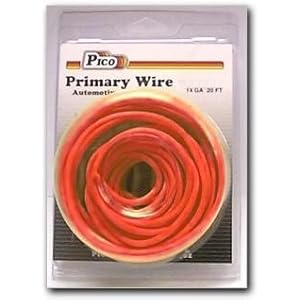
- 14 AWG wire - big enough to carry the headlight load
I also used a some 18 AWG wiring, crimp connectors, and heat-shrink tubing I already had.

I mounted the fuse box on the side of the engine compartment. Heavy steel was tough to drill. 2 holes to mount the box, plus one for ground screws.

I used the fuse box instead of in-line fuses for two reasons. First, the in-line fuse holders I tried fell apart in my hands. Second, the starter solenoid already had 5 wires attached to one stud (1 from the battery, 4 to various systems) and I would be adding 2 more. A fuse box can do the distribution, instead of everything being bolted on the stud. I only put these two new circuits (high beam / low beam) on the fuse box for now, but I may move the others over later.

I reused the existing headlight sockets, but leaving 3"-long pigtails to splice in to. They're only 18 AWG, but at that length it'll be OK.

I put silicone grease in every connection to keep out water & air, so it won't corrode. Solder + heat shrink tubing would have been more secure, but I think this will be good enough.

The headlights seem brighter now, although I don't have good before-and-after comparisons.

While I was looking around the engine compartment, I noticed a bunch of disconnected wiring on the right side. There's a space for a battery that isn't there, a ground cable for that battery, and what looks like a second starter solenoid, but is actually a battery isolator relay. This truck used to have a slide-in camper long ago.

The reason I started working on this headlight project was because I got stuck while working on the motorhome. Its battery isolator was dead, and I was having a trouble finding a replacement. I was at the auto parts store looking for one, which they didn't have, so I bought the bits for this headlight project. Yay, got my isolator for free. :-)

Thursday, July 15, 2010

We were totally lied to by our album covers!

I use Skype video to stay in touch with my far-flung family. I was just thinking about how video communication appeared in futuristic films when I was a kid. Take, for example, this shot from 2001: A Space Odyssey:


(I took it from this clip: http://www.youtube.com/watch?v=vWwo6JpMceg).

Notice anything funny? Something that doesn't match our real experiences with Skype? She's looking at us. 

In real, face-to-face communication, we look each other in the eye. I look at you and see you looking back at me.

When I Skype with my brother, I look at the picture of him on my screen. But the picture he sees isn't taken from my screen, it's taken from my camera, which is usually on the top of the monitor. So to him it looks like I'm looking down instead of looking directly at him.

In the videophone sequence in 2001, and in just about every other videophone scene in a movie ever, the person  on the other side is looking at a camera. It looks natural, but it almost never happens.

Recent media seems to be getting this right. For example, this NSFW video by Morningwood (http://www.youtube.com/watch?v=7kYLImd8_Xc).

I've noticed that the larger my screen is, the worse it gets, as that tends to increase the gap between the camera and the picture. I have taken to shrinking the Skype window and putting it as close to the camera as possible, to make it look more natural on the other side.

I wonder how long it will take for technology to make this easy? I wonder what technology it will require?

Maybe when digital cameras become dirt-cheap (like $0.01) and microscopic, we can make an LCD display with an array of cameras embedded in a matrix across it. Then the software can track the eyes of the person on the other side, and pick the camera closest to those eyes.

Monday, June 28, 2010

Mini-rant: 4-port USB hubs in LCD monitors

I always get LCD monitors with USB hubs in them, but they're always limited to 4 ports. That's not enough!

2 go immediately to keyboard and mouse.

The remaining 2 are shared with all my other USB devices I might have, like:

- portable scanner
- flash drive
- headset
- web cam
- smart card reader
- GPS device
- camera

Now, if they'd used 7-port hubs, they could have put 3 ports on the back (one would be the camera) and 4 ports down the side, and I'd be pretty well set.

Technological Innovation I'd like to see: USB and audio in video cables

I have these cables running from my monitor to my desktop PC:

- video
- audio to speakers
- USB

It gets worse if you have audio to microphone.

3-4 cables running from A to B is dumb. I know that HDMI includes audio, but it's hard to get resolutions over 1920x1080 with HDMI. And, no USB.

I wish DVI had included channels for USB and audio. Then I could have a cleaner space behind my desk.

Technological Innovation I'd like to see: USB control of monitors

I already have a 4-port USB hub in my LCD monitors, but it's just a bolt-on device. It shares only a housing an a power supply with the monitor.

I wish the monitor itself was a USB device. I hate pushing the tiny buttons on the bezel, trying to navigate awkward menus to change monitor settings. Instead I'd like to do it in software.

I already have a USB cable running from the PC to the monitor, so we're almost there!

I have heard that Mac monitors do this, so I'm just wishing that PCs would get their act together. It should have happened years ago.

Monday, March 29, 2010

How to start Where are Your Keys?

One thing I've always struggled with, since I first started learning Where are Your Keys (WAYK) was how to start learning WAYK!

Before watching the first WAYK video, I had heard discussion and description of the game, but still didn't get it. A short time later I felt like I understood the game, but didn't know how to explain it in a way that actually made sense. Conclusion:
The only way to understand WAYK is to play it.
That implies:
Explaining WAYK ahead of time is a decelerator.
The thing to do is get playing as quickly as possible.

Another thing that I struggled with at the very beginning was the question "what am I supposed to be doing here?" Should I be trying to memorize signs? Is getting the answer to "what's that?" right important? It certainly was in my high school German class. I found myself trying hard to remember the sign for "black pen" and sign it quickly enough to keep up with the video. This is also a decelerator.

Better to just play along, and let it go how it goes. I suspect that complete newbie players need to get this message early on - that just playing along is fine, don't worry about trying to learn.  I don't have enough experience with this to be sure, though.

Another thought came to me from listening to a recent WAYK debrief podcast. (I think it was this one.) Justin said that he doesn't do 2 colored pens with first-time players, because it's simpler for them to get just "pen" instead of dealing with colors. This is spot on. I think that it's particularly important to get the newbies immersed in the game as quickly as possible - really playing, not thinking hard - so they can understand how to play faster. In fact, for the very first few rounds, I would limit to just 3 objects instead of 5 (maybe even 2!). It's Technique: Bite-Sized Pieces with a very small piece for someone who is just trying to figure out eating for the first time.

On a similar note, I think that explaining Travels With Charlie is interesting, but until you've played the very round, I think it's a decelerator. Just get playing as soon as you can.

Jay's techniques for total newbies:


I've been imagining the situation where a stranger and I both miss the bus. We have some time to kill until the next one comes, and I ask if they want to learn sign language while we wait.


1. Give the shortest intro possible (Technique: Short Intro)

If you'd like, I can teach you a little sign language. We're going to have a very simple conversation about these objects. I'll start, and you join in as soon as you are read.
It may also help to add:
Don't worry about trying to learn something and get it right. Just play along. If you're not sure what to do, just copy me.
2. Play simply (Technique: Simple Set-Up)

Use 2 or 3 objects, instead of the regular 5. Pick objects with simple names (a rock is better than a 1 dollar bill). Don't use two similar objects that require differentiating (only 1 pen).

3. Start playing alone (Technique: Play Solo)

Explain the sign for "What's that?" in English. Then ask and answer "What's that?" for each of your objects in turn. If your newbie doesn't copy, remind them to.

After a few rounds they will be comfortable enough that you could have them start asking you.

Now your players are not complete newbies. You can add a couple more objects in perhaps including color. You can have conversations about how the game works, what to do, where we are going, Techniques, etc.


Adaptation when you have a non-newbie

If you have two or more players, where one is a total newbie and one is not, you can play with the more experienced player instead of playing by yourself. That will probably work a little better.

These are just my ideas, I haven't had much chance to test them on folks. I'm sure I'll learn more as I do.

Friday, March 26, 2010

WAYK Arabic - Travel's with Charlie

When using Where are Your Keys? to learn a language, we use Technique: Travel's with Charlie to describe different levels of language skill, based on the ACTFL scale.

Here is my translation of this scale for Palestinian Arabic:

Level 1 - Tabouli Babaghanoujh Hummos.
Level 2 - How to make hummos.
Level 3 - Explain why olive oil is so good for you.
Level 4 - Negotiate peace if the Middle East.

To put it another way:

Level 1 - Eat Arabic food
Level 2 - Make Arabic food
Level 3 - Why Arabic food
Level 4 - Get everyone to eat Arabic food

Great hummos

Whenever I go to a potluck I bring hummos. I follow my Tata's recipe, which I've been eating since I was a baby. We eat it with every meal. It's a comfort food for me, so whatever is leftover after the party is something I will enjoy.

Traditionally they would use a mortar and pestle to grind the beans, but today we all use a food processor. They probably made fresh hummos every day. One day I hope to try the old way. In the food processor, I make a double recipe.

- can of chick peas (aka garbanzo beans), drained
- clove of garlic, peeled.
- fresh parsley
- 1/3 C raw tahini
- 1-2 lemons, juiced
- 1/2 t salt
- olive oil

Pull the leaves off the parsley, as the stems don't taste good. Put them in the food processor, with the garlic. Process until the garlic is diced.

Add chick peas. Process until somewhat smooth.

Add tahini, lemon juice, and salt. Process another minute. These ingredients should be adjusted to taste.

Put in a bowl, smooth the surface, and cover with a thin layer of olive oil.

To eat, tear a small piece of pita bread, bend it in to a scoop, and use it to pick up some hummos. Pop it in to your mouth, and announce Sahtein.

Thursday, March 25, 2010

Got a cold?

A friend was feeling down about how often her young child has been sick recently. I wrote some thoughts on it to her, and now I'm posting them here.

I hope they get you thinking.
Conventional thinking is "colds are an enemy and must be stopped!" They're the problem. We combat them with antibiotic drugs, hand washing, coughing in to our elbows, etc.

A common progressive view is that it's really good practice for her immune system. The cold challenges you and you get better at fighting off future colds. "What doesn't kill you only makes you stronger." They're a necessary evil.

Another common progressive view is that you only get sick when you haven't been taking care of yourself. If you just get enough rest, good nutrition, avoid sugar, avoid stress, etc., your body will be strong enough to fight off a cold. If you get sick, it's because you're weak. They're a symptom. (Or a punishment, if you're in to that sort of thinking.)

Consider the possibility that being sick is beneficial right now. That the body invites the sickness in to do something important. Something it can't do itself. Suppose you're tired but don't let yourself sleep. So, you get sick. Then you sleep. See? It worked!

Or you need to be coddled and cared for a little extra. You get sick. People around you give you a little extra care. See, it worked again!

Or you have some toxins in your body that you can't clear for some reason. But chest cold triggers a lot of mucus in your lungs, which your body fills with toxins and then coughs out. Tada, it worked! Thank you cold!

I don't mean that you should try to get sick by eating badly, increasing your stress, or avoiding sleep. Do take good care of yourself; it feels good to do so! But when the sickness does come, give it a chance to work. Maybe it's doing something really good for you. Rest, eat chicken soup, and let people take care of you.

Mainstream: Colds are the problem.
Naturopath: Colds are a symptom.
My radical view: Colds are a cure.

Saturday, March 13, 2010

WAYK Arabic 3 - Want Have Give Take

This time, we actually play a couple rounds, and talk about Want/Have/Give/Take.

You can play along a little here, but really you gotta lead your own game. See http://www.whereareyourkeys.org for more.

WAYK Arabic 2 - CraigsList Mine/Yours

As a followup to my initial What's That? video, I present a "Craigs List" of Mine / Yours / etc.

As before, this video is meant to plug in to a Where are your Keys game that you run, not to lead you in a game.  See http://www.whereareyourkeys.org to learn more.


Arabic words are often modified based on the gender of the person you're talking about. So, for example, "your"  is different for a boy or a girl. I don't know a good way to represent this in ASL. Ideally we'd develop some pidgin sign technique for this aspect of Arabic, which would apply through WAYK Arabic.

Wednesday, February 03, 2010

Budget

The feasibility study is pretty much done. The only real outstanding question I have is whether the county will allow us to build the kind of house we want. I won't be able to get a solid answer until I actually apply for a building permit, but I'm hoping to get a hint now, before we actually pay for the land. I do know that there are straw-bale houses in the area, as well as an underground / fully bermed / living roof house, so that establishes a precedent for alternative construction.

With the time available before closing, I'm going to try to draw up a budget. There will be a lot of hand-waving, but it'd be good to get the sticker shock out of the way. If it's outrageous, we can still walk away.

Here's some numbers I have to compare to:

Tom Elpel built his first house in the early 90s, using foraged rocks, trees from a forest fire, and his own labor for $10/sq. ft.

Over the last 5 years he built another house, using many reclaimed materials and his own & volunteer labor for $15/sq. ft.  He was very ... resourceful.

I talked to a log-house builder in the next county. He said they build the house at his facility, then disassemble, ship, and reassemble. (When I was visiting, a guy was using a drawknife, which is awesome.) He said that a log house shell is typically $30/sq. ft., while a finished ("turnkey") house would be $150/sq. ft.

There are a couple companies that do upscale, compact, eco-friendly manufactured homes.  One of them is Greenpod (http://www.greenpoddevelopment.com/pods.php). Another is ideasbox (http://www.ideabox.us/). They both work from a single-wide design, and will add on modules for a little extra room. They're low-energy / clean air / sustainable materials, so we thought about using one instead of building our own. Two problems: they're too small for a family of 5, even if we like each other a lot, and they're expensive. ideasbox fortino is $150k for $1250 sq ft. (that's $120 / sq. ft.).  Greenpods:
Pods start at less than $160.00 per square foot. This includes module fabrication, but not the cost of your land, site preparation, transportation and setting of Pod, or site improvements.
That's a lot of additional costs. Our water hookup fees (not actually running the water pipe) will be $9000, for example.

There's something troubling about theses prices. For one thing, a $150,000 is inherently not "green". If you're planning on buying one, where are you going to get $150,000? Talk to any eco-nut, and they'll tell you there's not much money to be made doing sustainable work. All that money's gotta come from somewhere. We are quickly converting all natural capital in to money, and that's tough on the ecosystem. Similarly, the money you spend on the house will be used to direct more of the same behavior. The economy is inherently eco-unfriendly. Just look at how much waste we create here in the most affluent country in the world. The poor parts of the world that are making a lot of waste are doing it in a desperate attempt to copy us!

This is why the "eco-mansion" feels so wrong to me. That kind of luxury is always wasteful.

That doesn't mean that we have to be miserable to "save the planet". Quite the contrary! The eco-mansion is a substitute for our true desires; when we meet those true desires we find the most fulfillment possible.

What a delicious tangent.

Anyway, there are some points to measure against. It's spreadsheet time.

Tuesday, January 26, 2010

Good network printer/scanner wanted

I have a Lexmark X4550 printer/scanner/copier. I love that I can scan stuff and that it's wifi, and that it's pretty fast, but I hate so much else about it. I have been in the market for a better unit since the day I got it, but can't seem to find just the right thing.

It requires you to install a bunch of software on your computer. It's clearly not very good software, and I worry about what havoc it could be causing. It's a slow install, too. Also, there are 6 different versions, by OS. So for each computer I have to download again. And because it's big, the download is far from instant.

To scan over Wi-Fi, it goes like this:
  1. load the document
  2. switch to scan mode
  3. browse a list of destination computers, and pick one
  4. wait while it queries the computer for "applications"
    • This sometimes fails after a minute
    • These are things like "File, Email, Web Browser, and Computer"
    • "File" brings up a custom Save As dialog on the target computer. You can't hit ENTER, you have to actually click Save. If you scan again before saving, the first scan is lost.
    • "Computer" means to launch Lexmark's crappy scan touch-up software
  5. select an application (I always use File)
  6. click Scan Color or Scan Black 
  7. wait while it scans
  8. on the target computer, save the file
It has a USB port, so I can carry a laptop to it and plug in directly. This installs a second instance of the printer, which I don't really want, since I'm just trying to scan. When you do that with Windows Vista or 7, you can't use the Scan buttons any more. Instead you have to launch Windows Fax and Scan an use that interface. It's a fine interface, but it's at the computer, and scanning should happen at the scanner.

I have one pre-Vista machine, my Windows Home Server (which is based on Windows Server 2003). If I plug in to USB there, the Scan buttons follow the same sequence as Wi-Fi.

I don't scan that often, so I tolerate it, but every time I use it I am annoyed.

The print functionality is OK. The installed software insists on speaking "Printing Started" over the speakers. It sometimes fails to print with no obvious reason. Every print job asks me if I want to register, even if I check the "don't remind me again" option. It does paper jam more often than I expect, but maybe that's a hard problem.

The print & scan quality are good enough that I have no complaint.  And at my low usage level, the speed is fine.

What I really want

Small. I want something unobtrusive.

Internal paper trays. Less likely to get peanut butter on the paper.

1-touch scanning.  Load the document, click scan, and be done. The file should appear on a network share on my server ("\\SERVER\Scanned Documents").

Easy setup. On a new computer, do Add Printer -> Add network printer, and it finds it and downloads the driver from Windows Update.

Wi-Fi. I want to print from any computer in the house. But this isn't a requirement, because I could plug it in to the server and share it out there.

All-in-one isn't a requirement. I would accept a separate printer and scanner, if that's what it took. I'd even plug the scanner in to the server if that's what it took to get one-touch scanning. If they were separate units, I'd probably get a color laser from Dell Outlet, as they're not too expensive. The long-term costs are lower, as the toner doesn't age like inkjets, and I don't print much.

I've tried googling for printers, but it doesn't work. "network scanner" turns up packet sniffers. "scan to share" turns up anti-virus software.
 
Creative Commons License
This work is licensed under a Creative Commons Attribution-NonCommercial-ShareAlike 3.0 Unported License.